
Grease and carbon removal where it actually collects
We target corners, seams, hardware, and equipment backs where grease film turns into sticky buildup. Detail work matters more than making the front look shiny.
Serving Fredericksburg, Virginia & surrounding areas
Mon–Fri 8am–6pm · Sat 9am–2pm
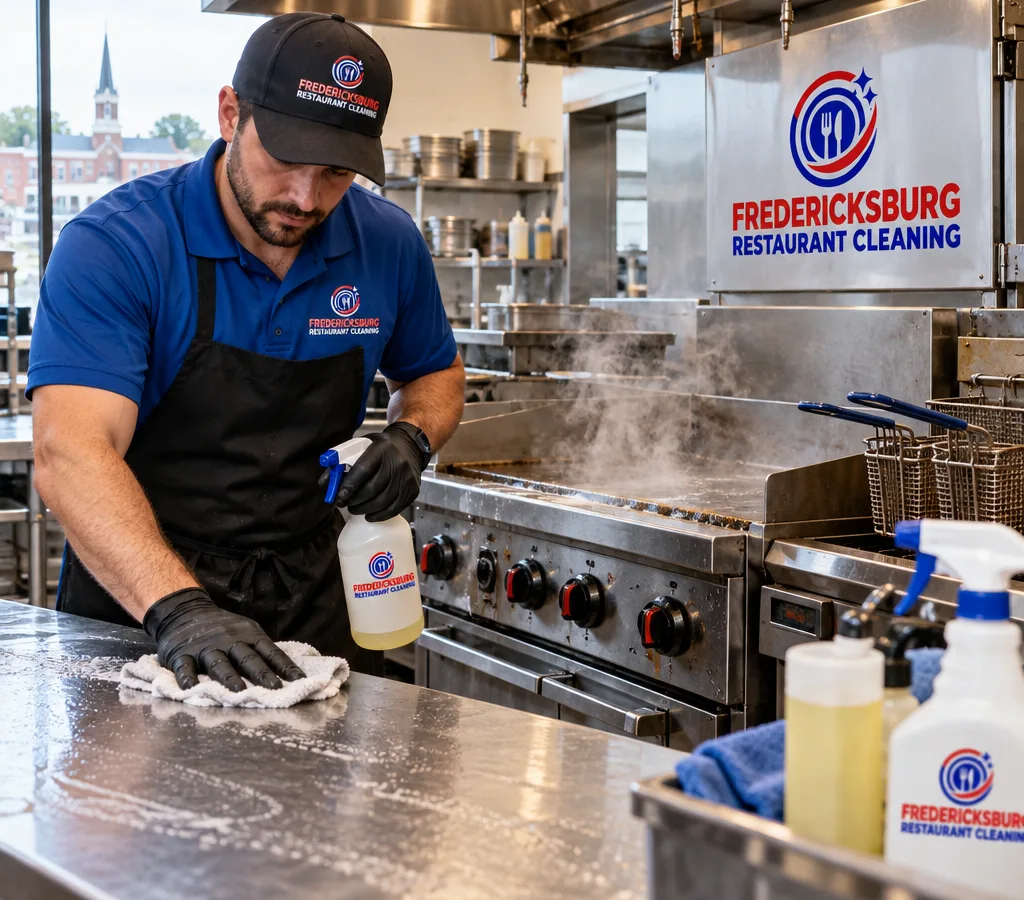
Keep your kitchen inspection-ready with detailed cleaning for the equipment that holds grease, carbon, and food soil. We work around service hours and document the scope so you know what was cleaned and why.
Restaurant equipment gets dirty in ways that regular wipe-downs cannot keep up with. Grease aerosol settles behind and under cooklines, carbon builds on hot surfaces, and food soil collects at seams, gaskets, and wheels. If you are searching for Restaurant Equipment Cleaning Stafford, you likely want a team that can clean the hard parts thoroughly, without disrupting your operation.
Fredericksburg Restaurant Cleaning provides targeted cleaning for commercial kitchen equipment for restaurants in the Stafford area and nearby. Our work is built around practical outcomes: improved sanitation, fewer odors from old grease, easier day-to-day upkeep for your staff, and a kitchen that looks organized and maintained when an inspector or ownership walks through.
We focus on the equipment that drives risk and complaints when it is neglected: cookline surfaces and sides, fryer areas, griddles and ranges, hood-adjacent equipment exteriors, prep equipment touch points, and the grimy zones that hide behind casters and splash guards. You will get a clear scope before work starts so the cleaning matches your equipment list and the condition of the kitchen.
We target corners, seams, hardware, and equipment backs where grease film turns into sticky buildup. Detail work matters more than making the front look shiny.
Handles, knobs, guards, ledges, and undersides get cleaned because staff touch them all shift. These spots are frequently missed during busy service cycles.
When equipment can be safely moved, we clean the sides, behind, and underneath. When it cannot, we plan a realistic approach based on access and safety.
Stainless, painted panels, anodized parts, and heat-treated surfaces do not all tolerate the same pads and degreasers. We choose methods that clean without leaving damage.
Equipment cleaning is often best after close or on slower days. We build a plan that fits your staffing, delivery windows, and prep needs.
You should be able to point to what was done, what was out of scope, and what needs a follow-up. We keep the work straightforward and accountable.
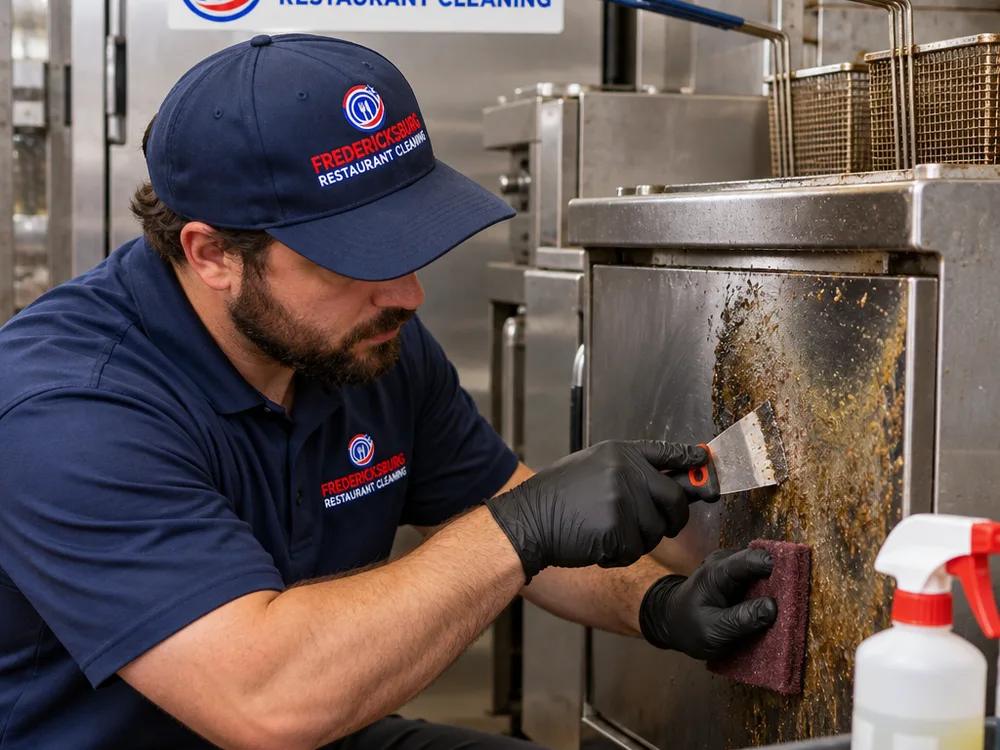
Equipment cleaning is not one-size-fits-all. A fryer area needs heavy degreasing and attention around controls and legs. A prep station needs detail cleaning around seams, undersides, and splash zones. We tailor the process to the equipment type, the soil load, and how the unit is used.
Typical Restaurant Equipment Cleaning Stafford requests include:
If you manage multiple concepts or a high-volume kitchen, the right approach is often a rotating schedule: deeper equipment detailing on a cadence, with lighter maintenance cleanings between. That is usually the most practical path to consistent results without shutting down production.
Step 1 of 5
We start by confirming the equipment list, access limits, and any priority areas (fryer bank, prep line, expo, dish area). We also note surfaces that need special handling.
Step 2 of 5
We coordinate around hot surfaces, power, and gas where applicable. Floors and nearby surfaces are protected so cleaning stays controlled and contained.
Step 3 of 5
We apply appropriate chemistry, agitate buildup, and detail around edges, vents, legs, casters, and controls. The goal is removal, not hiding grime with fragrance or polish.
Step 4 of 5
Residue is removed and surfaces are wiped down to a clean finish. Stainless is left clean and consistent, not streaked with degreaser film.
Step 5 of 5
We review results with your manager and note any access issues or areas that would benefit from a follow-up deep clean or a different cadence.
Restaurant equipment cleaning in Stafford typically ranges from $250 to $1,200+ per visit, depending on how many pieces are included and how heavy the grease and carbon buildup is. A smaller scope (one line of equipment exteriors and surrounding detail areas) often lands in the lower end, while a full-kitchen equipment detail with move-and-clean work runs higher.
Final pricing depends on access (can units be moved), safety constraints (hot surfaces, power, gas), the condition of equipment, and whether the cleaning is one-time or on a recurring schedule. The exact cost is confirmed after a walkthrough and written scope so the work matches your kitchen and priorities.
Stafford-area kitchens often run tight prep windows and late closes, so equipment cleaning has to fit the rhythm of service. We regularly schedule work after close, before open, or on a planned low-volume day so the cookline is ready when your team needs it.
If you are coordinating equipment cleaning around deliveries, special events, or staffing gaps, it helps to set priorities: the equipment and zones that affect sanitation and safety first, the cosmetic items second. That is also how most inspections feel in practice. A clean, well-maintained cookline and surrounding areas read as controlled and professional.
Our teams stage supplies carefully, keep walk paths clear, and focus on completion. If you need broader recurring coverage beyond equipment, our professional restaurant cleaning can be structured to include dining areas and back-of-house cleaning on a consistent schedule while keeping equipment detailing as its own planned scope.
We had grease buildup behind the line that our staff could not keep up with. They moved what could be moved, cleaned the sides and underneath, and left the stainless looking even instead of streaky. The kitchen looked better immediately.
The scope was clear and they worked around our closing time. The fryer area and the panels next to the cookline were the biggest difference. It felt like a reset for the team.
Tell us what equipment you want addressed and what your service hours look like. We will provide a written scope and a schedule that keeps your kitchen sanitary, presentable, and easier for your staff to maintain.